Homeopathic treatment for Ichthyosis
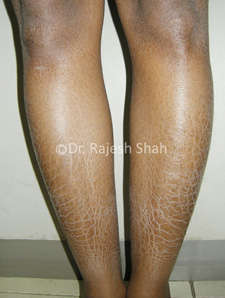
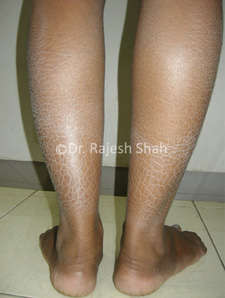
Ichthyosis is derived from the Greek word "ichthys" meaning "fish". It is a skin disorder in which there is a formation of dry, thickened, scales or flakes on the skin, which appear like fish scales.
The condition often begins in early childhood and is usually lifelong.
Types of ichthyosis
The most common types of ichthyosis are:
- Ichthyosis vulgaris- Ichthyosis vulgaris is commonly observed in most people. It accounts for about 95% of all ichthyosis cases
- Lamellar ichthyosis
- Epidermolytic hyperkeratosis
- X-linked ichthyosis.
Causes of ichthyosis
- It is seen to be a Genetic disorder that is passed from parent to child or that occurs spontaneously.
- The use of harsh soaps or detergents makes the skin dry and is known to cause ichthyosis.
- Cold weather is also an important factor that increases dry skin and leads to ichthyosis.
- Certain soaps or lotions containing certain scents or perfumes may also trigger this.
- Acquired ichthyosis is not inherited and occurs for the first time in adulthood. It is usually associated with some general systemic diseases, such as underactive thyroid, sarcoidosis, lymphoma, generalized cancer or HIV. It may be provoked by certain medications (such as kava, nicotinic acid and hydroxyurea).
Signs and Symptoms of Ichthyosis
Signs and symptoms may include the following:
- Itching of skin.
- Dry skin, scaling and flaking of skin.
- Mild itching.
- Body odour.
- Thick scales and cracks.
- Rough skin.
- Overheating: ichthyosis may affect normal temperature control by reducing the ability to sweat
- Limited movement: dry, scaly skin may make it too painful to move some parts of the body
- Secondary infection: cracking and splitting of the skin may lead to skin infections and sometimes systemic infections
- Impaired hearing or eyesight: Excessive skin may build up over the ears or eyes causing partial deafness or blurred vision.
Diagnosis of ichthyosis
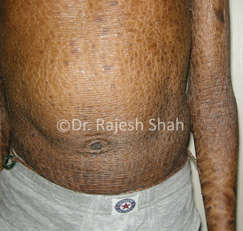 Often a physician is able to diagnose ichthyosis by examining the skin. A family history if available is useful. In some cases, a skin biopsy is done which is confirmatory.
Treatment for Ichthyosis
Ichthyosis can be treated, but it cannot be cured. The treatments are designed to relieve the symptoms. Common treatments consist of moisturizing and exfoliating the skin. This helps prevent dryness, and reduce scaling, cracking and build-up of skin.
Conventional Treatment may include
The use of moisture-retaining creams or ointments such as Petrolatum, lanolin or urea-containing preparations after a bath or shower helps in maintaining skin moisture.
Retinoid is also used for some conditions.
Sometimes exposure to sunlight can improve the condition.
If there is a skin infection or case of body odour, timely use of antibiotics is helpful.
Auxillary line of treatment
- Avoid taking hot baths or showers as they dry out the skin and use lukewarm to cool water. Soap should not be used on the affected skin because it irritates and dries the skin. One can use the soap substitute Cetaphil lotion which is available from the pharmacy without a prescription.
- Avoid rubbing the skin dry after you bathe.
- Living in a warm climate often improves ichthyosis.
Homeopathic Treatment for Ichthyosis
There is no cure for ichthyosis in homeopathy. It is a life-long condition that can be managed or controlled in the best manner with homeopathy. Homeopathy helps slow down the underlying disease activity in ichthyosis. The dryness, scaling, cracking, thickness of skin and build-up of excess skin may reduce with homeopathy medicines. Homeopathy is recommended to see if it works in a given case, for about six months. If there is an improvement, it should be continued; or else, it may be terminated.
Written & Approved by-
Dr. Rajesh Shah
M.D. (Hom.)